

Ummmm… My Clinical Master’s Program Never Taught Me How to Do My Taxes—or Run a Private Practice
I can explain DBT. But when someone asked whether my private practice needed an EIN, organizational NPI, quarterly tax payments, or a credentialing strategy, suddenly I needed my own distress-tolerance plan. Here is what clinical graduate school did not teach us about running a therapy practice.
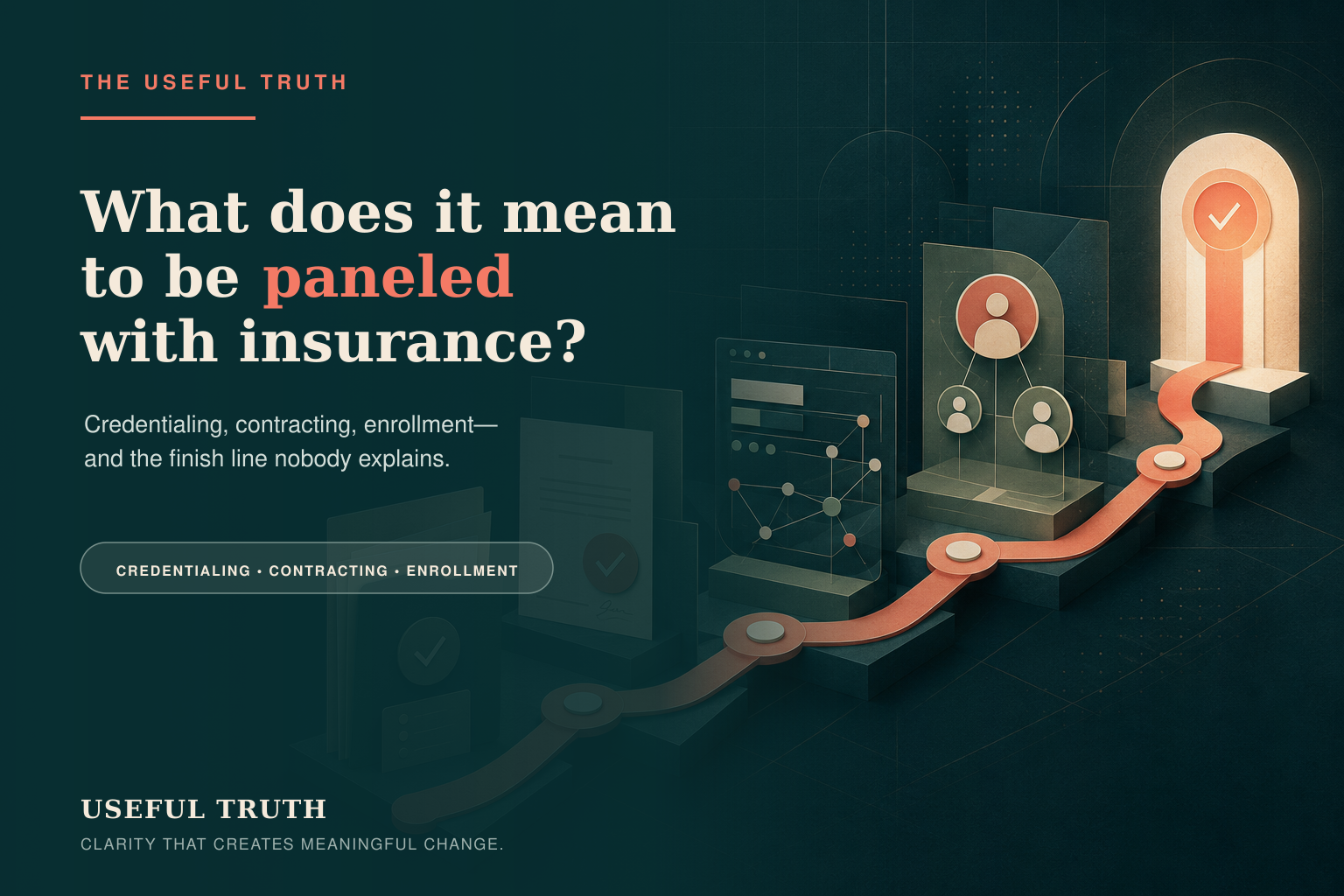
What Does It Mean to Be Paneled With Insurance?
Learn what insurance paneling means, how individual and group credentialing work, what CAQH does, and when an in-network practice may still accept private pay.
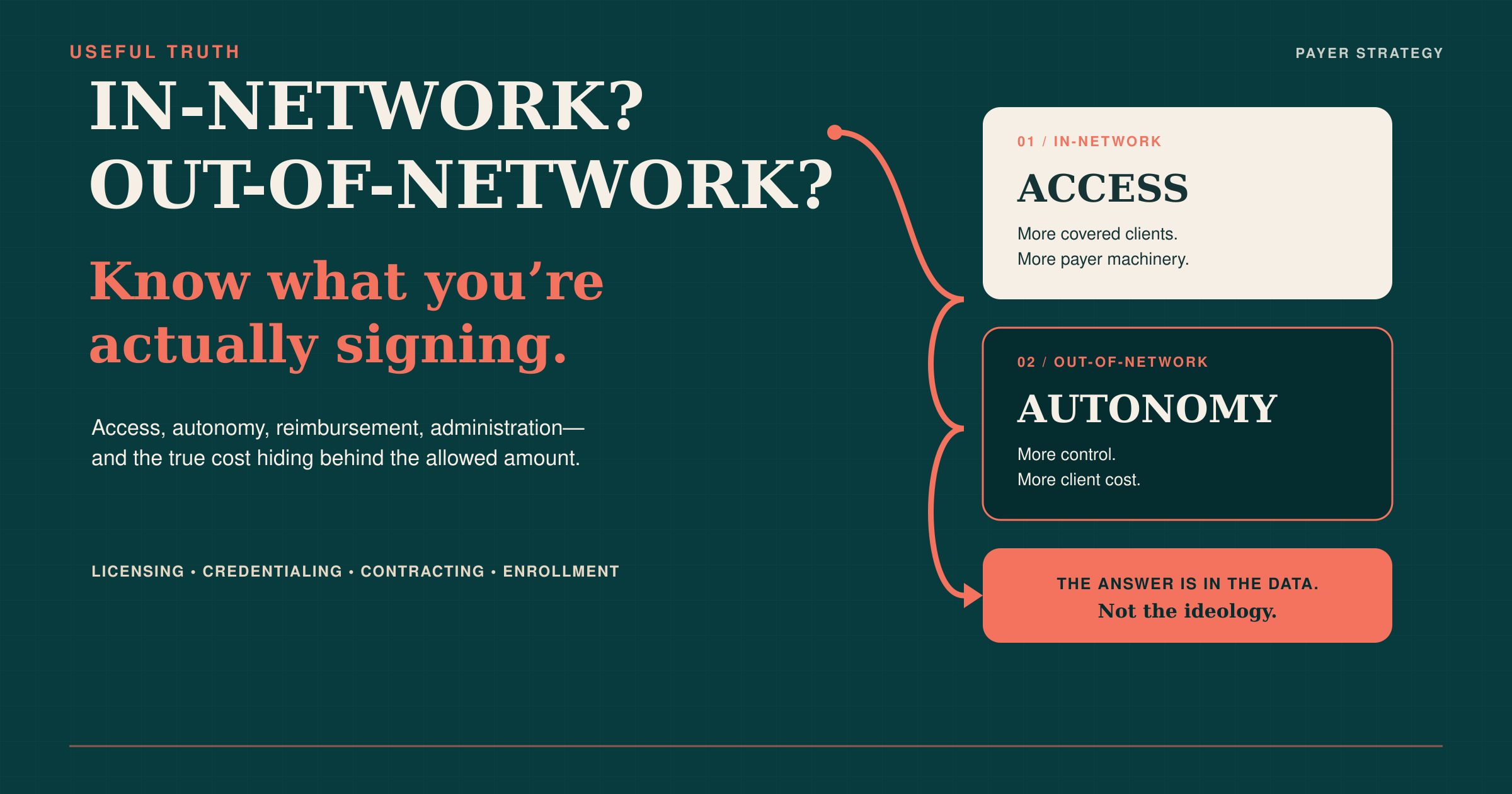
Should Your Behavioral-Health Practice Go In-Network—Or Keep Its Sanity?
Going in-network can expand access and stabilize referrals. Staying out-of-network can preserve flexibility and reduce payer friction. Neither model is automatically better—and the allowed rate is never the whole financial story.
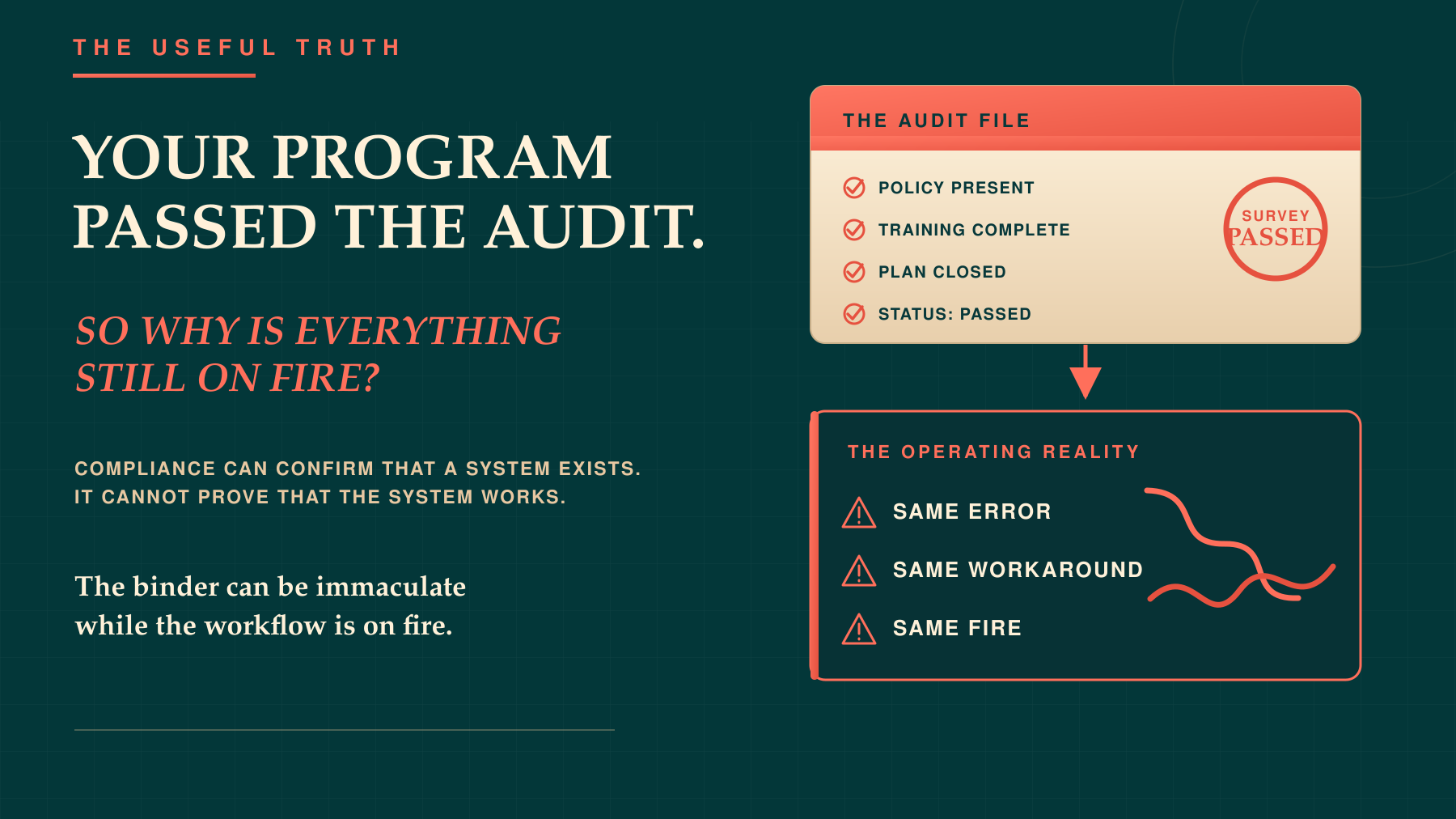
Your Behavioral-Health Program Passed The Audit. So Why Is Everything Still On Fire?
Your policies are approved. Your training files are complete. The auditor left happy. So why are handoffs still failing, staff still burning out, and the same problems still returning? Because compliance is the floor—not proof that your operating system works.
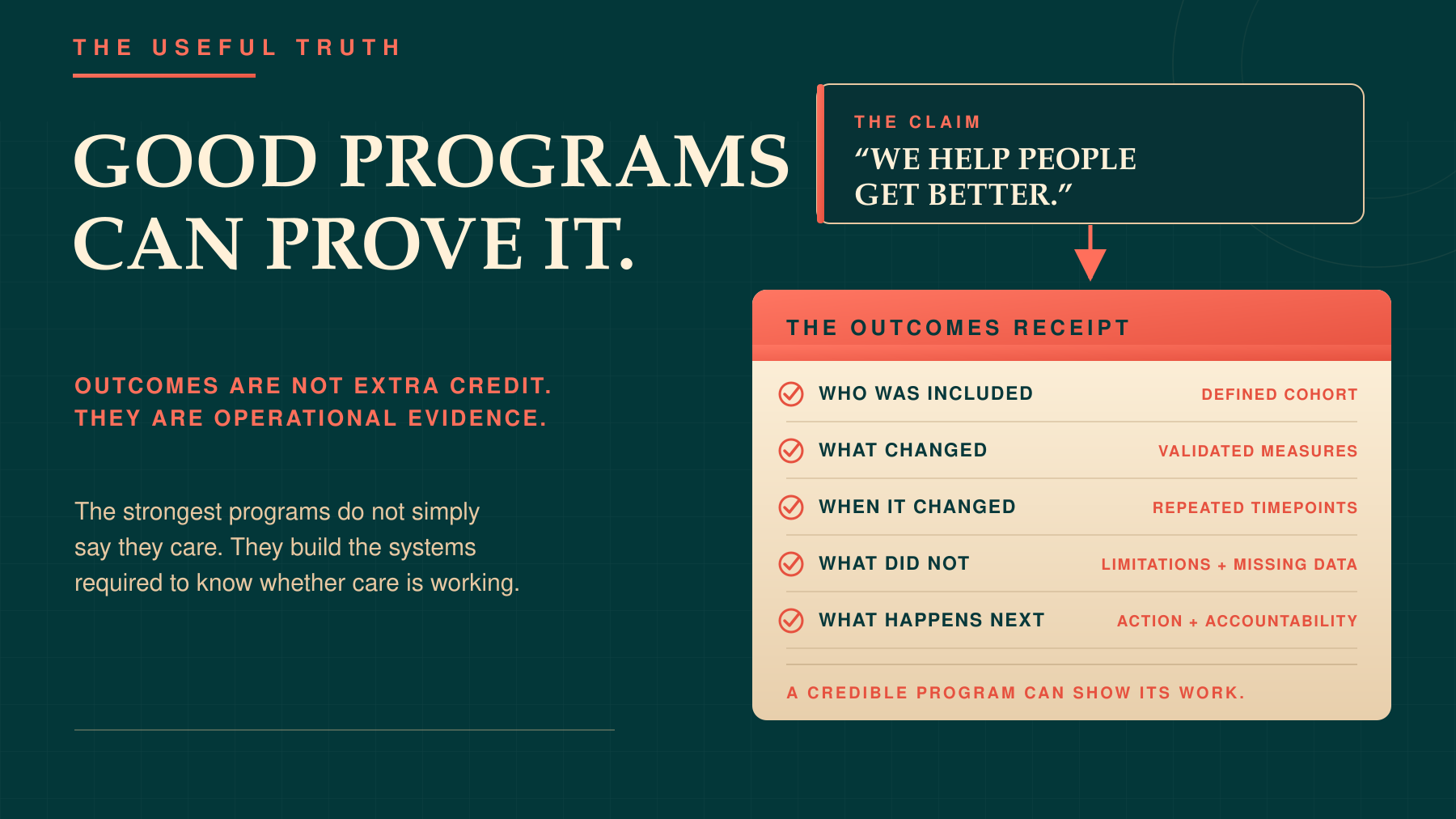
Good Programs Can Prove It
Good behavioral-health programs are not perfect. They are willing to define what good care means, measure whether it is happening, and act when the evidence says otherwise. Here is how outcomes become both a quality-improvement system and one of the most credible marketing tools an organization can build.
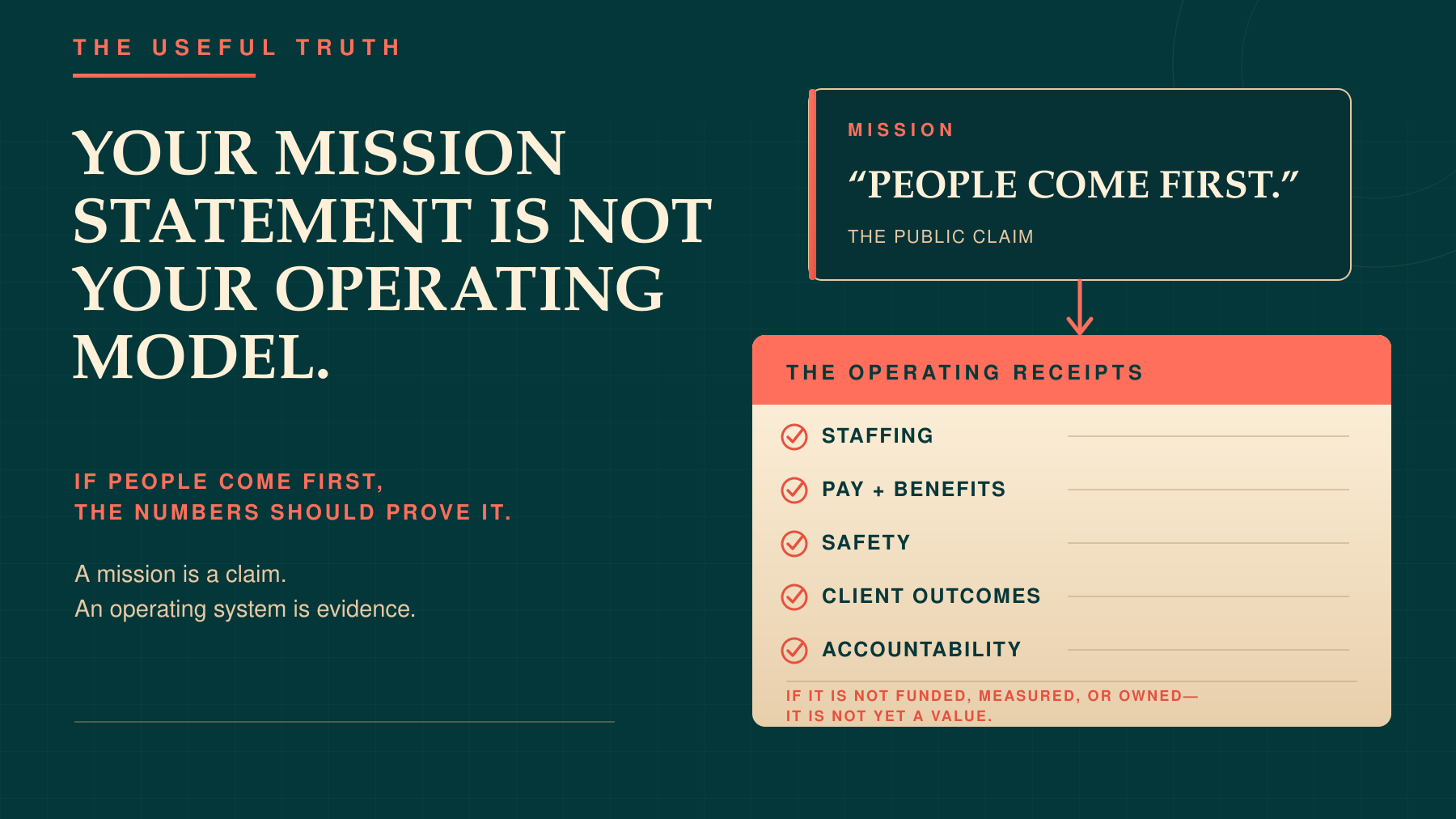
Your Mission Statement Is Not Your Operating Model
A mission statement is a claim. Staffing, pay, safety, supervision, outcomes, and accountability are the receipts. A hard look at what happens when behavioral-health values collide with financial incentives.

How Do You Know Whether a Behavioral-Health Program Is Actually Good?
The website can show you the clinicians, the mission, and the mountains. It cannot show you the overnight staffing, employee turnover, safety culture, or what happens when treatment is not working. Here is how clients, families, and prospective employees can investigate the operation beneath the promise.

How Often Should Behavioral-Health Policies Be Reviewed?
“Review every policy annually” sounds responsible—until no one can identify the source, the workflow has changed, and the highest-risk policy is waiting for its anniversary. Here is how to build a review schedule based on actual requirements, operational risk, and events that demand action now.

You Know Something Has to Change. You Just Don’t Have Time to Find It.
You know the policies need updating. You know the workflows are harder than they should be. But the same leaders responsible for fixing the system are consumed by running it. Here is what that costs—and how to create the capacity for real operational change.
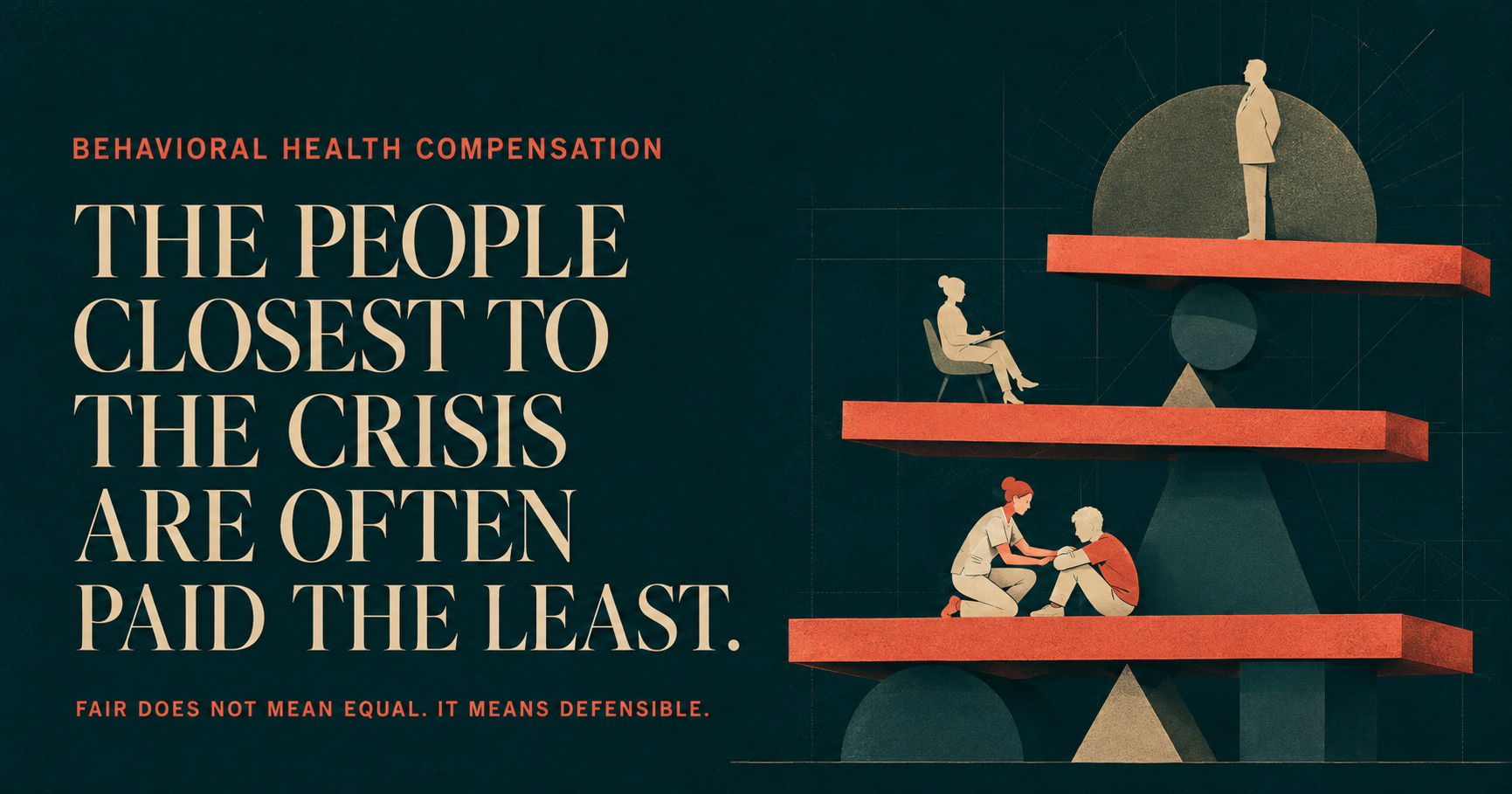
The People Closest to the Crisis Are Often Paid the Least
Behavioral-health technicians may earn $16 to $20 an hour while clinicians and leaders earn two or three times more. Different roles should not automatically receive the same pay—but every difference should be visible, defensible, and connected to the actual work. Here is how to build pay bands and benefits that are fair to employees and sustainable for the organization.
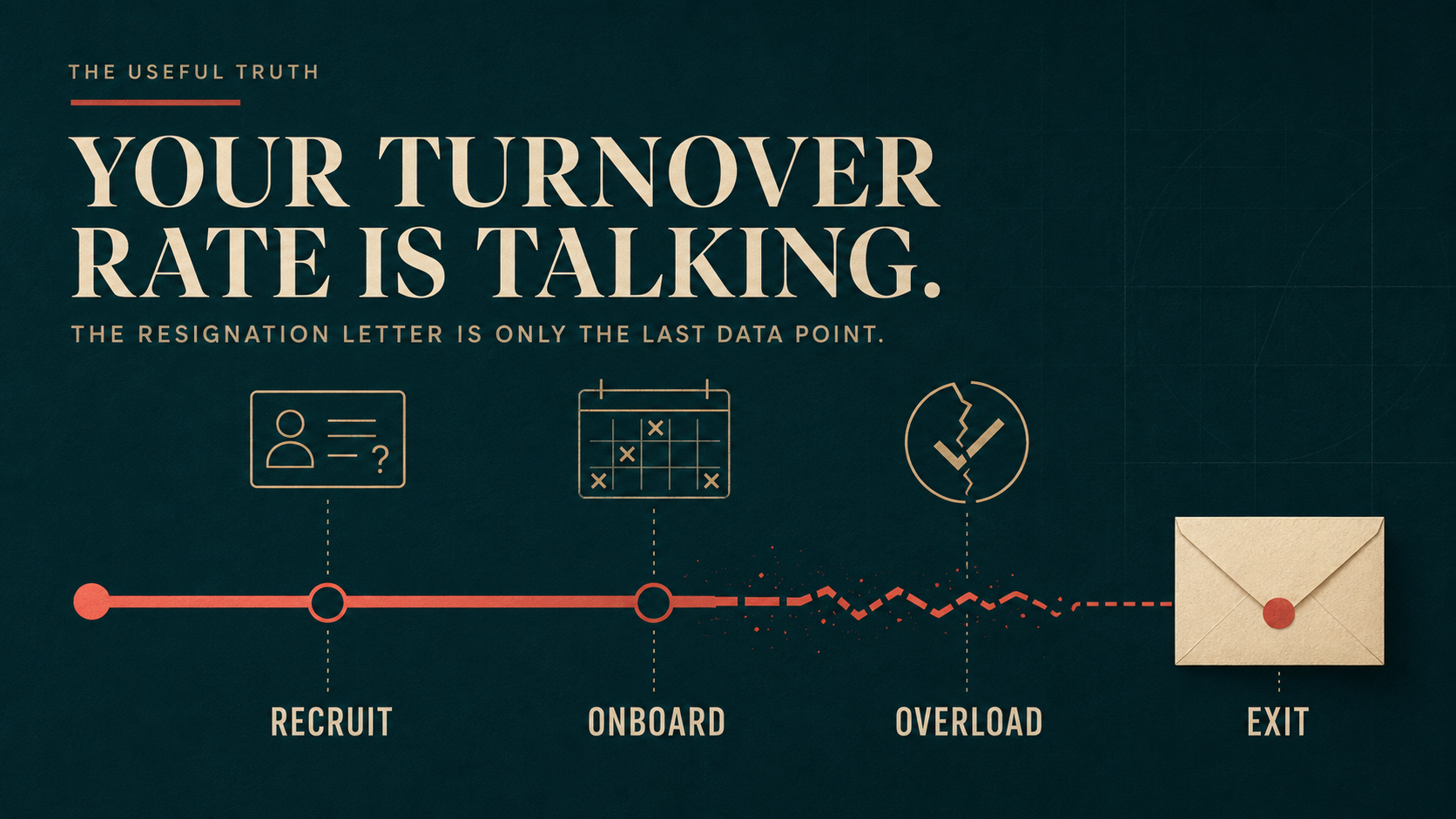
Behavioral Health Staff Turnover: What It Costs—and What It Is Actually Telling You
The resignation letter is usually the last data point in a much longer story. Learn what behavioral-health turnover really costs, what repeated departures reveal about the operating system, and why recruitment is your first retention strategy.
You Cannot Punish Truth-Telling and Expect the Truth
When employees do not believe it is safe to tell the truth, the truth does not disappear. It simply becomes more expensive. Here is how leaders can replace fear and ambiguity with fair, reciprocal accountability.
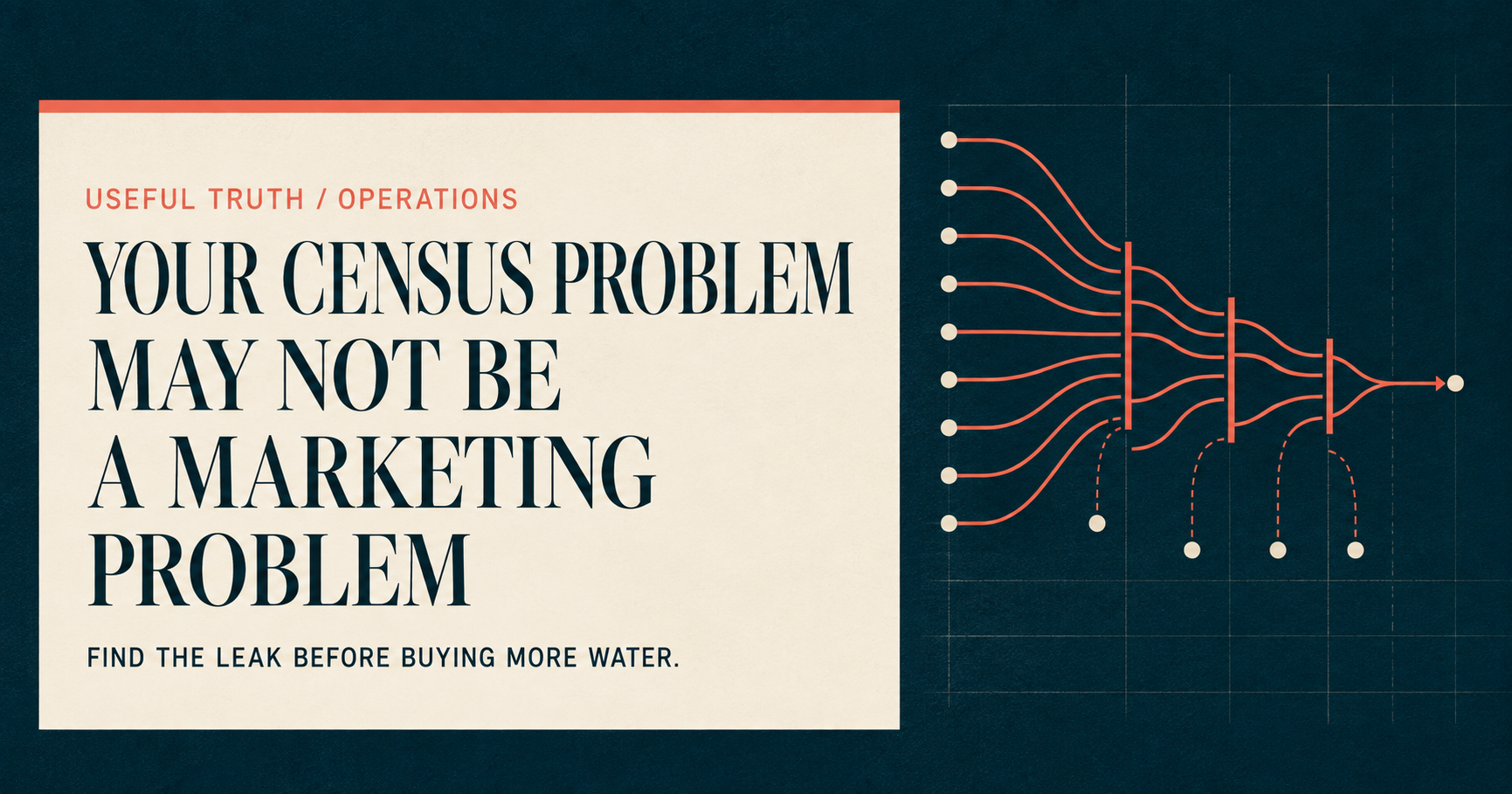
Your Census Problem May Not Be a Marketing Problem
Pouring more leads into a broken conversion process is not growth. Before increasing marketing spend, trace what happens from inquiry through admission, attendance, billing, and payment.
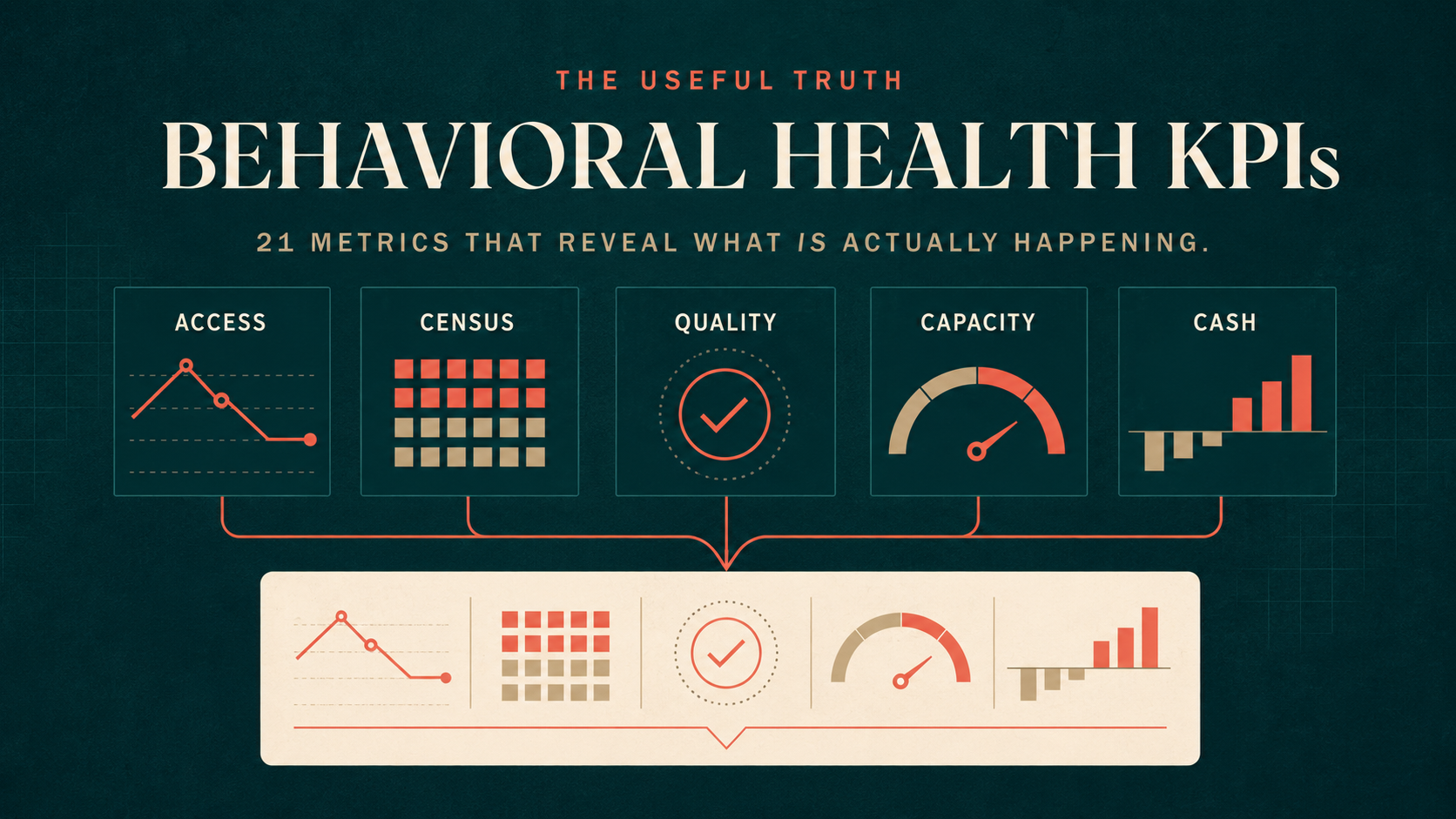
Behavioral Health KPIs: 21 Metrics Every Treatment Center Should Track
Most behavioral-health organizations have plenty of data and very little shared clarity. These 21 KPIs show leaders what to measure across access, admissions, quality, capacity, revenue cycle, and growth—and how to turn each result into action.
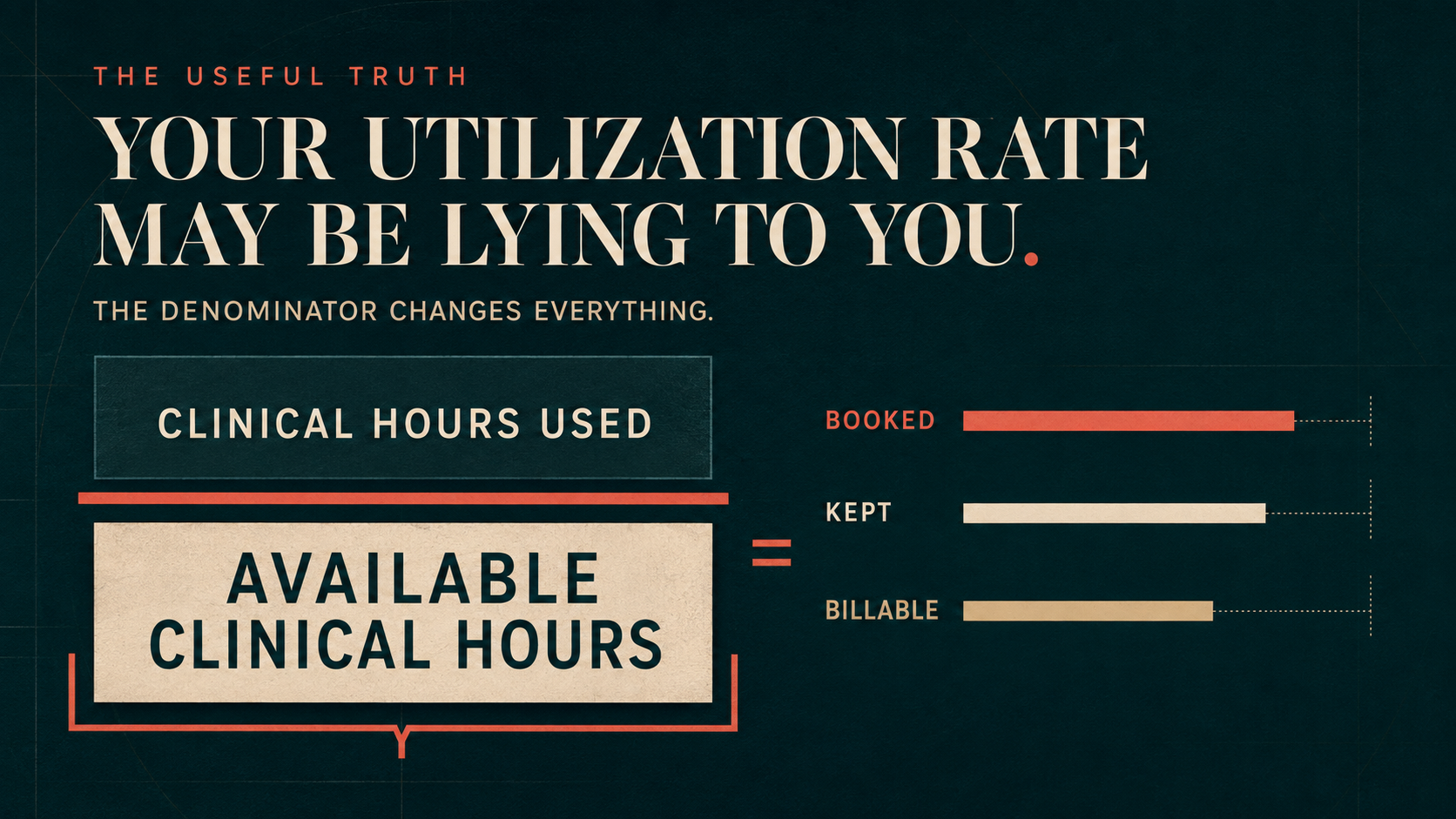
Therapist Utilization in Behavioral Health: How to Measure Capacity Without Manufacturing Burnout
Provider utilization is easy to calculate and surprisingly easy to calculate badly. Learn how to separate booked, kept, and billable utilization, define honest clinical capacity, and determine whether your real constraint is staffing, scheduling, attendance, or billing.
READY TO SEE WHAT YOUR ORGANIZATION IS TELLING YOU?
You do not need another generic solution.
You need a clear understanding of what is happening, an honest conversation about what needs to change, and a practical way forward.